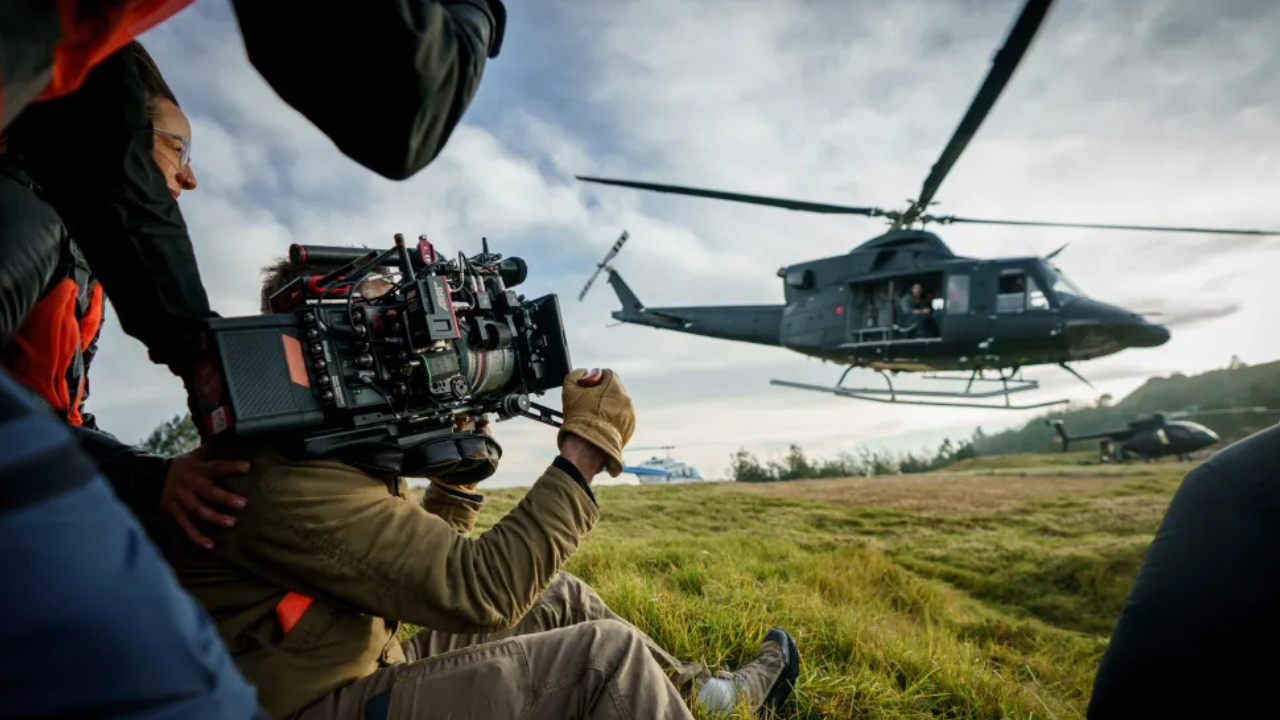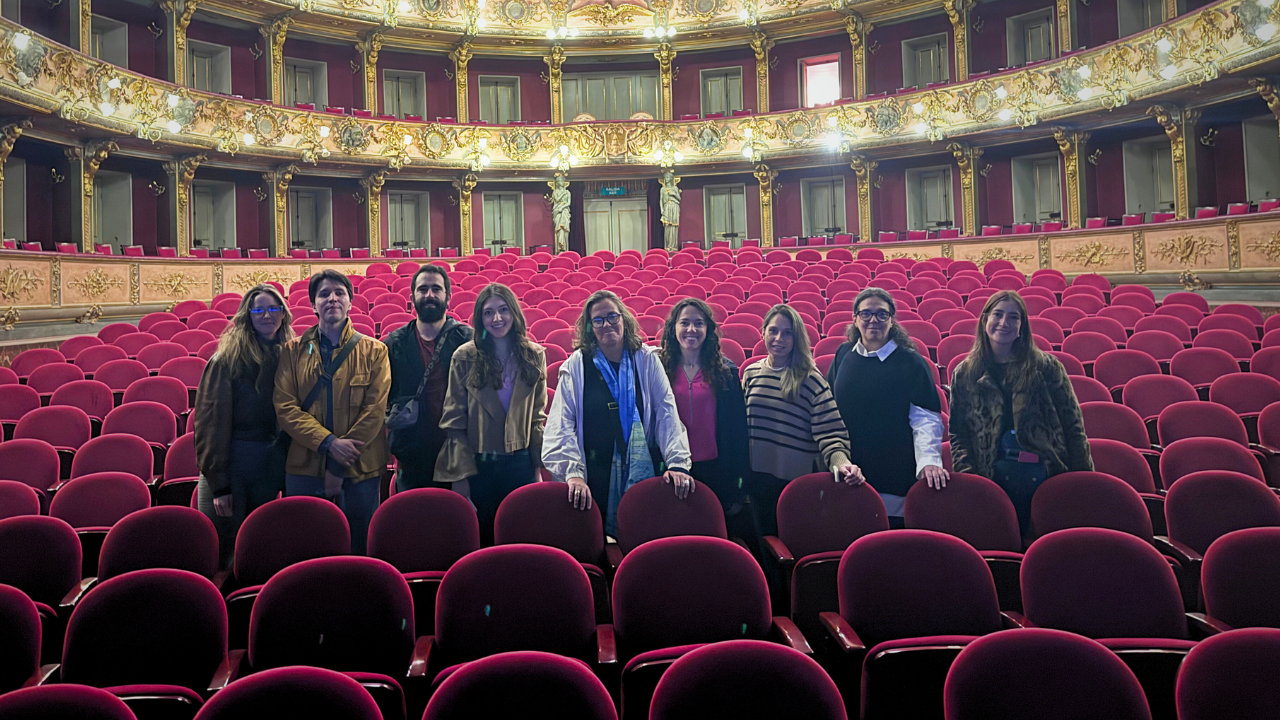
Estado de Fuga 1986 consolidates itself as a reflection of the moment the Colombian audiovisual industry is experiencing. A CINA audiovisual incentive beneficiary and produced with a mostly Colombian crew, the series reconstructs one of the most shocking events of the 1980s in Bogotá. Its premiere on Netflix this December 4 (exactly 39 years after the events) adds to the projects developed in Colombia for global platforms, showcasing the country’s solidity and growing production capacity.
The project is based on the real events involving Campo Elías Delgado, a story that left a deep mark on the city’s memory and inspired the novel Satanás by Mario Mendoza, who joined Ana María Parra to write the script and also serves as one of the executive producers. The narrative revisits these events from an intimate and reflective perspective, exploring the relationship between a former soldier and a young student, as well as the emotional deterioration that leads them to tragedy. It also incorporates an investigative component that addresses the ethical, social, and psychological dimensions of the case. The series is directed by Carlos Moreno and Claudia Pedraza, and its main cast includes Andrés Parra, José Restrepo, and Carolina Gómez, accompanied by actors such as Jorge Enrique Abello, Camila Jurado, Marcela Benjumea, and Consuelo Luzardo.
Fuga originated as an initiative by AG Studios, following a request from Netflix to develop in Colombia a series with these characteristics and produced with national talent. From this initial proposal, a development and structuring process began, during which Elvira Films, a foreign company led by executive producer Mineko Mori, joined as an investor and main partner.
Elvira Films acquired the license for Netflix and hired AG Studios to carry out the production in Colombia. From its inception, the project has been driven by AG Studios, which has led the conceptualization, coordination, and full operation of the production in the country.
For Mineko Mori, who is producing directly in Colombia for the first time, the experience confirmed the significant growth the industry has undergone in recent years. She highlights the quality of technical crews, the strength of creative talent, and the diversity of locations available in the country.
“Colombia has become a very attractive place to produce. It’s not just the incentive; it’s the combination of experienced professionals, a growing industry, and a variety of locations that allow you to meet all kinds of narrative needs. The operation ran very smoothly thanks to the AG team, which knows the processes well and has worked with incentives several times,” says Mori.
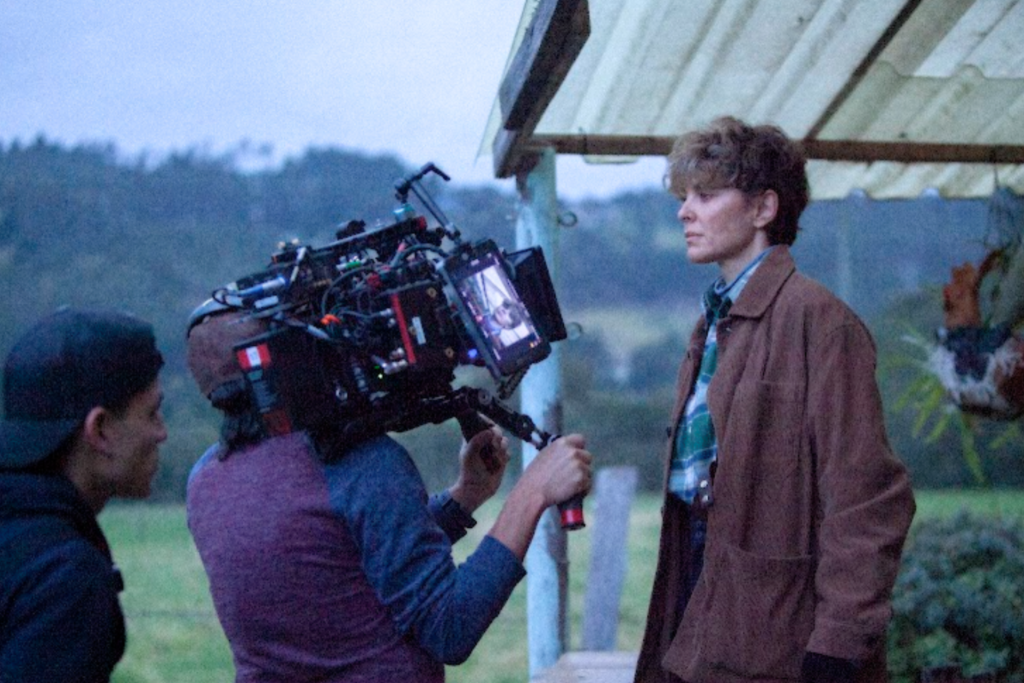
The scale of the project also demonstrates the operational and technical strength of the Colombian audiovisual industry. Estado de Fuga 1986 mobilized more than 240 professionals, 98% of them Colombian, reflecting the high level of professionalization in the country. The eight-episode series also required more than 1,500 extras and involved extensive logistics across multiple Bogotá locations: traditional neighborhoods such as Las Cruces, areas of the historic center, La Salle University, Central University, Bosa, among others. At this scale, the project confirms that Colombia offers a wide range of locations, strong crews, and an operational capacity fully prepared for high-level productions.
According to Cristina Echeverri, the project’s executive producer, “the incentives were key to making the production viable. Without them, a project of this size wouldn’t be possible. When the foreign producer acquires the license and evaluates where to produce, Colombia becomes an attractive destination not only because the story takes place here, but also because the incentive structure makes the investment competitive.”
The producer also highlights the institutional support of the Colombian Film Commission in the financial and legal processes related to audiovisual incentives, which provides confidence to investors and demonstrates the government’s commitment to the industry’s development.
With its release, Fuga brings back a historic chapter of Bogotá and reaffirms Colombia as a competitive destination for large-scale international productions. Thanks to the support of the Colombian Film Commission and the Law 1556 incentives, the country offers all the conditions needed for the development of any type of project.